
Ear Infections in Cats
Ear Infection in Cats
If you suspect that your kitty has an ear infection, it's important to seek veterinary care as quickly as possible to identify the cause. A veterinarian can treat the ear infection, which will prevent the infection from spreading and becoming more severe. Left untreated, ear infections in cats can lead to hearing loss and ongoing discomfort for your cat.
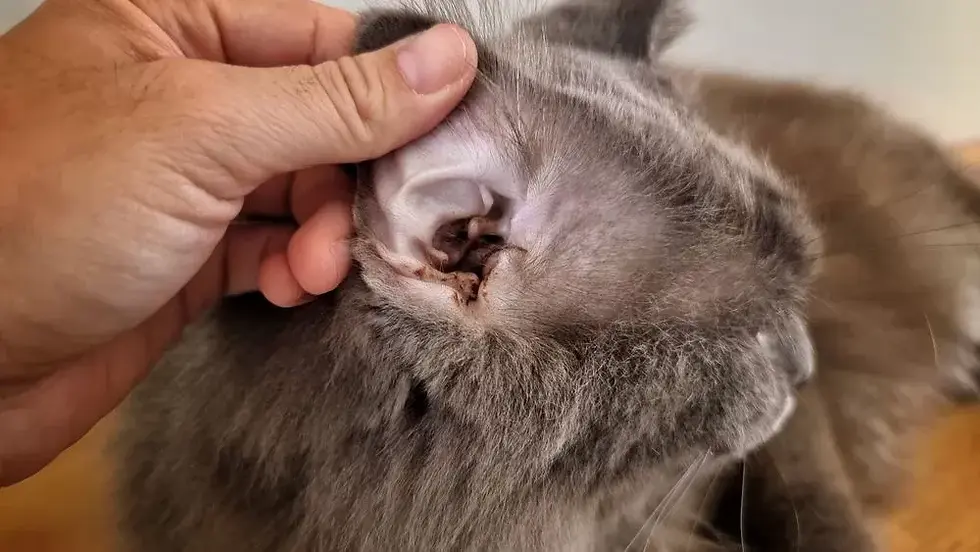
What causes ear infections in cats?
Ear mite infestation is the most common cause of outer ear infections in cats. Ear mites can spread easily between cats and should be treated quickly to help prevent the condition from worsening, and to stop the spread of this problematic parasite. Inner ear infections in cats can also occur due to severe infections of the outer ear that have not received effective treatment.
Here is a list of some of the most common causes of outer and middle ear infections in cats:
Irritants in the environment
Wax buildup in the ear
A foreign body lodged in the ear canal
Allergies (food, pollen, etc.)
Immune system diseases (FLV or FIV)
Autoimmune diseases
Diabetes mellitus
Thick fur or hair in the ear canal
Excessive growth of yeast, bacteria, or both
Tumors or polyps in the ear canal
Ruptured eardrum
Incorrect ear cleaning
What are the signs of ear infections in cats?
Your cat may paw at their ear, repeatedly shake their head, or look generally uncomfortable if they have an ear infection. Other signs that your cat may have an ear infection include:
Redness or swelling in the ear canal
Redness or swelling in the ear flap
Yellow or black discharge
Discharge that looks like coffee grounds
Waxy buildup near or on the ear canal
Head tilting
Disorientation
Hearing loss
Strong odor
Loss of balance
How will the vet diagnose my cat's ear infection?
Your vet will start by using an otoscope to look into your cat’s ear canal, then take a sample of ear debris to examine under a microscope to determine whether bacteria, yeast, or ear mites are causing the infection.
How to Treat Ear Infections in Cats
Yeast or bacterial ear infections in cats, or ear mites, may be treated with corticosteroids, antifungals, antibiotics, or anti-parasitics in ear drop form.
At-home treatment for your kitty's ear infection involves monitoring the condition of your cat's ears to check that the interior of the ear flap is clean and that the canal is clear. If your vet has prescribed ear drops, gently lift the ear flap, then squeeze the solution into the ear canal, massaging the base of the ear to help the medicine work its way into the ear canal.
Early treatment of infections is essential to avoid increasing severity of the infection that could lead to recurring, chronic ear infections in cats, or even facial paralysis and hearing loss.
If you suspect your cat has an ear infection, please feel free to book an appointment with us or walk-in during our clinic hours (Thursday-Sunday 2pm-11:30pm).


Comments